Simple Moving Average (SMA): The Cleanest Read on Trend Direction
The Simple Moving Average (SMA) is like the bread and butter of technical analysis in trading. It’s a mathematical calculation that helps traders smooth out price data to identify trends by averaging the closing prices of an asset over a specific number of periods. Picture it as the trail left by a car that shows where it’s been and hints at where it’s heading.
For example, if you’re looking at a 10-day SMA, you add up the closing prices of the past 10 days and divide by 10. This average gives you one data point. Repeat this process for each day to create a smooth line that tracks the average price over time.
Moving averages are the compass of the market, guiding traders through the noise toward prevailing trends, but only if you steer with caution.
- Anonymous
How to Use SMA in Trading?
The SMA is a simple tool that can help traders better understand price movements and trends. Here is how you can use it in trading:
Identify Trends
The SMA smooths price data to highlight the overall trend direction. A rising SMA points to an uptrend, while a falling SMA indicates a downtrend.
Spot Support and Resistance
In trending markets, the SMA can act as a dynamic support or resistance level where prices often react.
Use Crossovers for Signals
Crossovers between a shorter SMA (e.g., 50-SMA) and a longer SMA (e.g., 200-SMA) can signal changes in market momentum. A bullish crossover suggests upward momentum, while a bearish crossover indicates downward momentum.
Filter Market Noise
The SMA reduces short-term price fluctuations, making it easier to focus on broader trends and meaningful price movements.
Focus on Trending Markets
The SMA works best in trending environments. In range-bound conditions, it may give unreliable signals, so additional analysis is recommended.
Avoid Lag: Remember, SMA is a lagging indicator, meaning it reacts to past price movements. Be cautious of relying solely on SMA for timely decisions.
How to calculate SMA?
The formula for calculating the SMA is:
Where:
- = Simple Moving Average
- = Number of periods
- = Price at period
Importance of SMA in Trading
The Simple Moving Average (SMA) is important for simplifying market data, allowing traders to focus on long-term trends without the distraction of short-term volatility. It helps identify key support and resistance levels, making it easier to spot potential entry and exit points. The SMA also plays a significant role in validating price action and trend reversals, ensuring more informed and confident trading decisions. By providing a clear trend direction, the SMA helps traders align their strategies with the market’s momentum.
Combine with Other Indicators: Always combine SMA with other indicators to confirm trends and avoid false signals.
Understanding Standardized SMA Values in Trading
The Simple Moving Average (SMA) is a cornerstone in technical analysis, offering traders a way to smooth out price data and identify trends. While the SMA can be customized to any period, certain standardized SMA values have become widely adopted in the trading community. These standard values, such as the 50-day, 100-day, and 200-day SMAs, each serve distinct purposes and provide critical insights into market behavior. This docs delves into these standardized SMA values, explaining why they are commonly used and how they can enhance trading strategies.
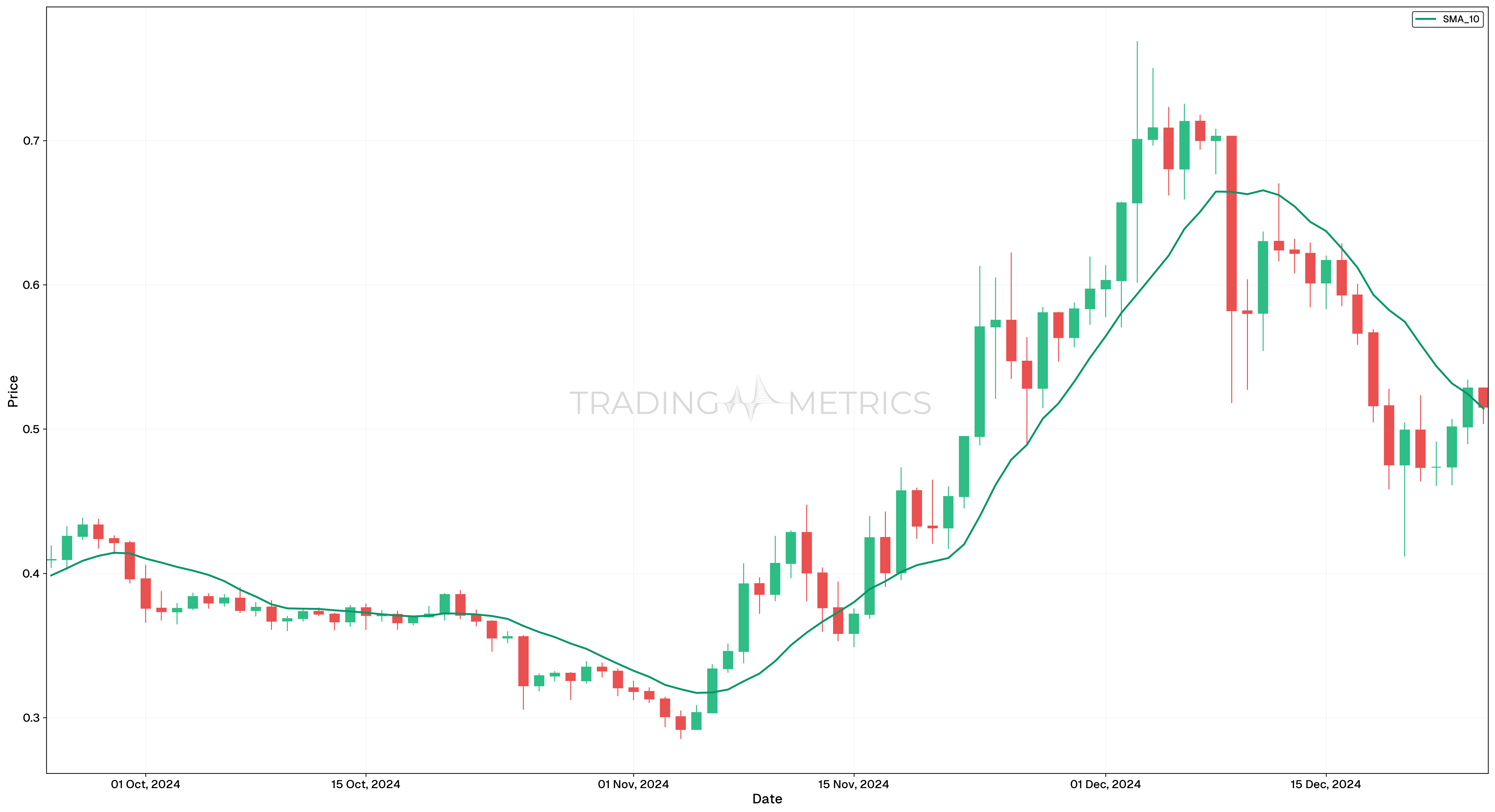
10-Day SMA
The 10-day SMA is even shorter-term, focusing on the average closing price over the past 10 days.
Why It’s Used:
-
Immediate Trend Analysis: It helps traders who are looking for very short-term trends and quick trades.
-
Highly Reactive: Due to its short period, the 10-day SMA reacts quickly to price changes, making it useful for spotting immediate momentum shifts.
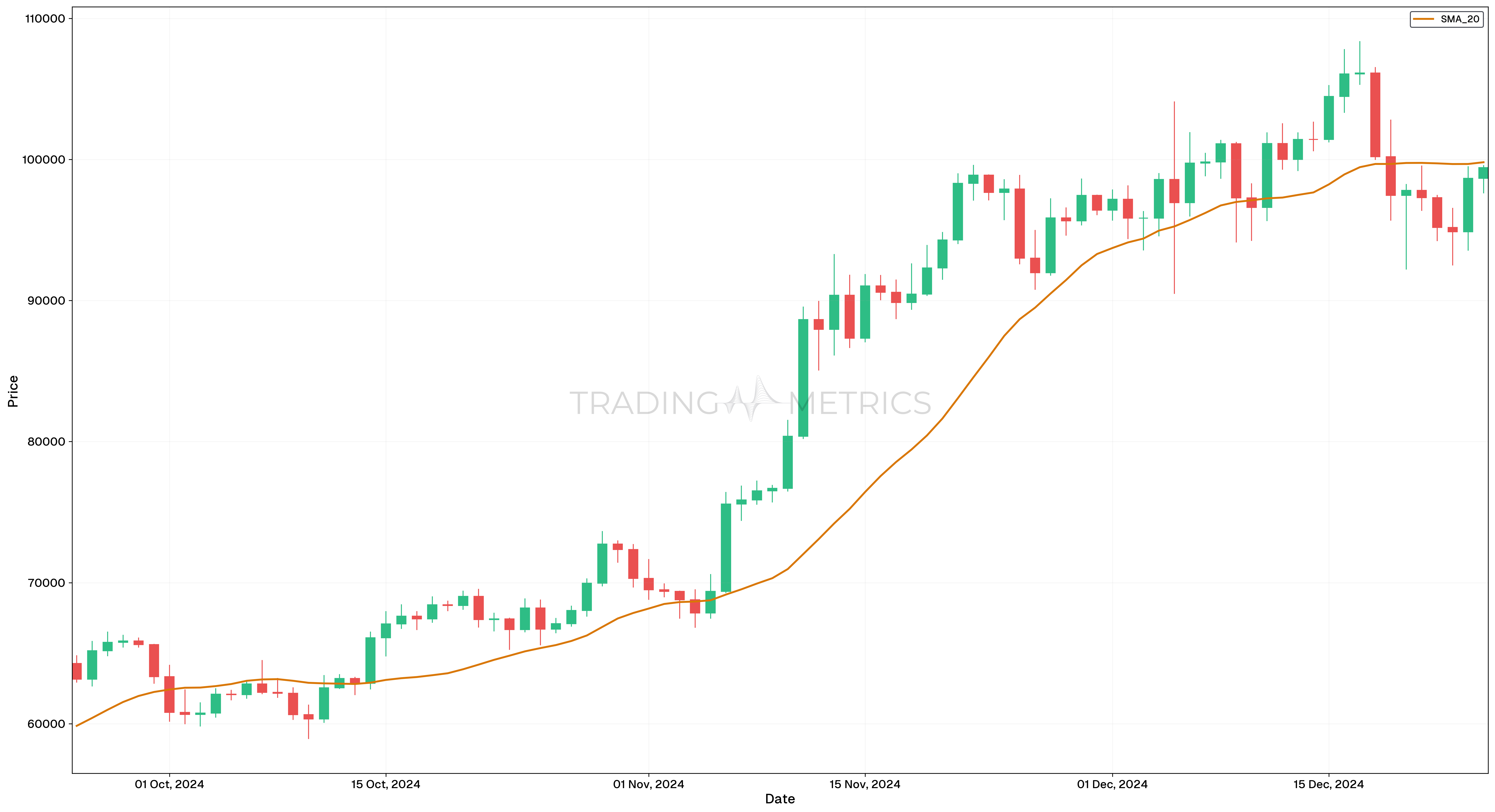
20-Day SMA
The 20-day SMA is a short-term moving average, calculating the average closing price over the past 20 days.
Why It’s Used:
-
Short-Term Trends: Ideal for short-term traders and swing traders to identify quick trends and potential entry or exit points.
-
Volatility Indication: It can help indicate market volatility, as it is more sensitive to recent price changes.
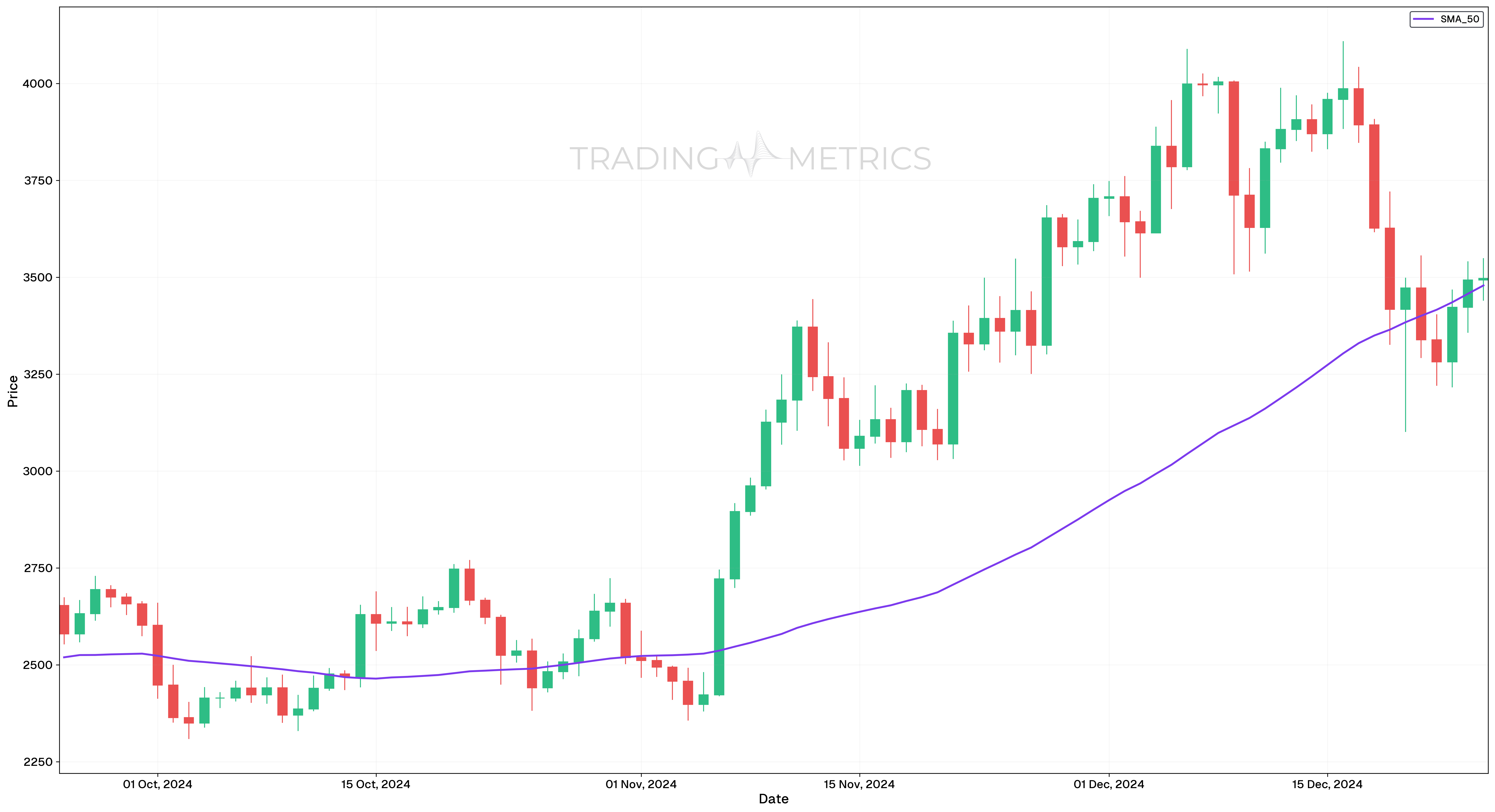
50-Day SMA
The 50-day SMA is one of the most commonly used short-term to mid-term moving averages. It calculates the average closing price over the past 50 days.
Why It’s Used:
-
Trend Confirmation: Traders use the 50-day SMA to identify and confirm short-term to mid-term trends. If the price consistently stays above the 50-day SMA, it suggests a bullish trend, while staying below indicates a bearish trend.
-
Support and Resistance: The 50-day SMA often acts as a dynamic support or resistance level. During an uptrend, the 50-day SMA can provide support, while in a downtrend, it can act as resistance.
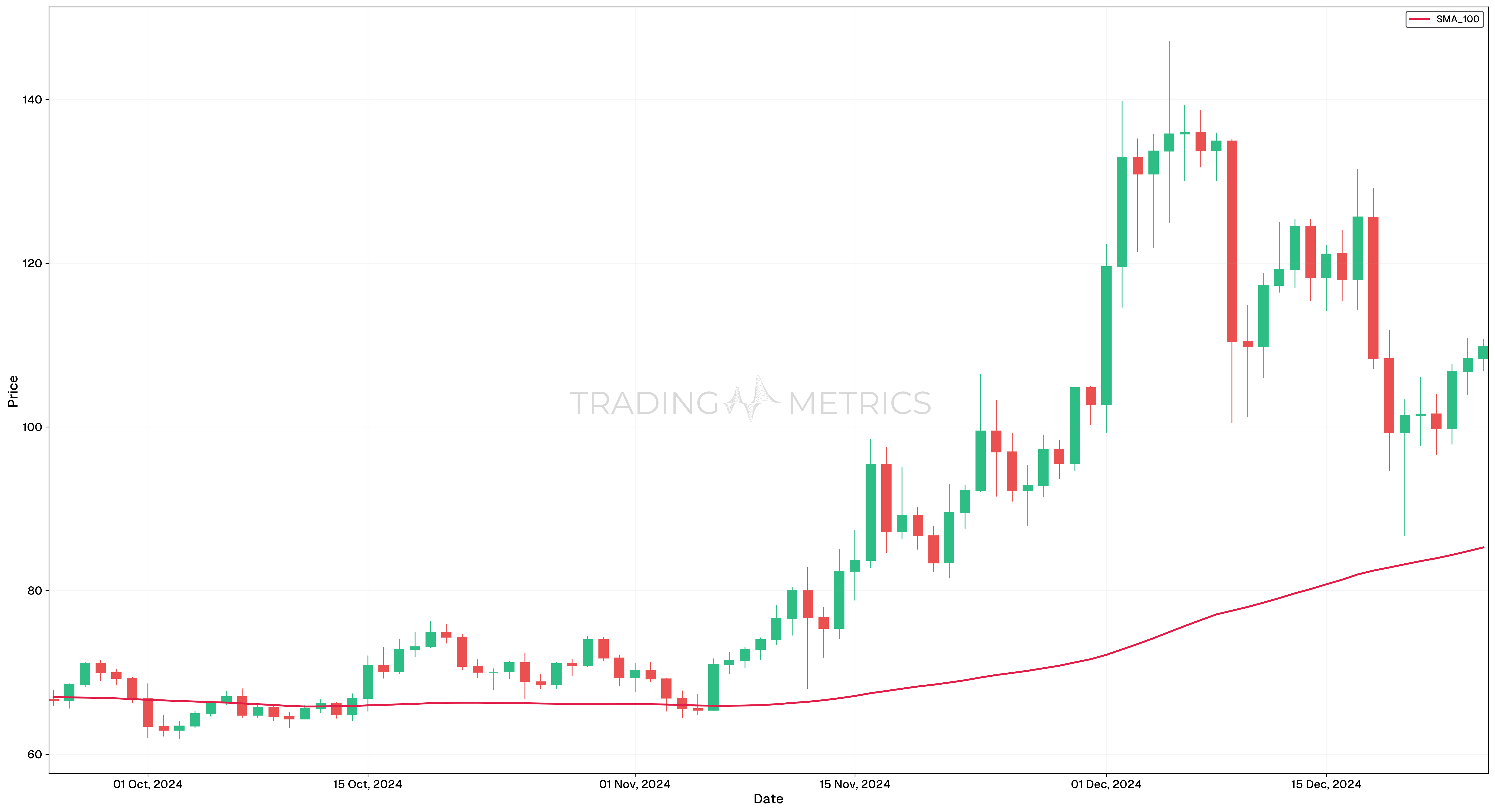
100-Day SMA
The 100-day SMA is used for longer-term trend analysis compared to the 50-day SMA. It averages the closing prices over the past 100 days.
Why It’s Used:
-
Longer Trend Analysis: This SMA helps traders observe longer-term trends, providing a broader perspective than the 50-day SMA.
-
Intermediate Support and Resistance: The 100-day SMA serves as a significant intermediate support or resistance level.
200-Day SMA
The 200-day SMA is a crucial long-term moving average, reflecting the average closing price over the past 200 days.
Why It’s Used:
-
Major Trend Indicator: The 200-day SMA is a key indicator of the overall long-term trend. If the price is above the 200-day SMA, it generally signals a bullish market, while being below indicates a bearish market.
-
Investor Sentiment: Many institutional investors and fund managers use the 200-day SMA to gauge market sentiment and make investment decisions.
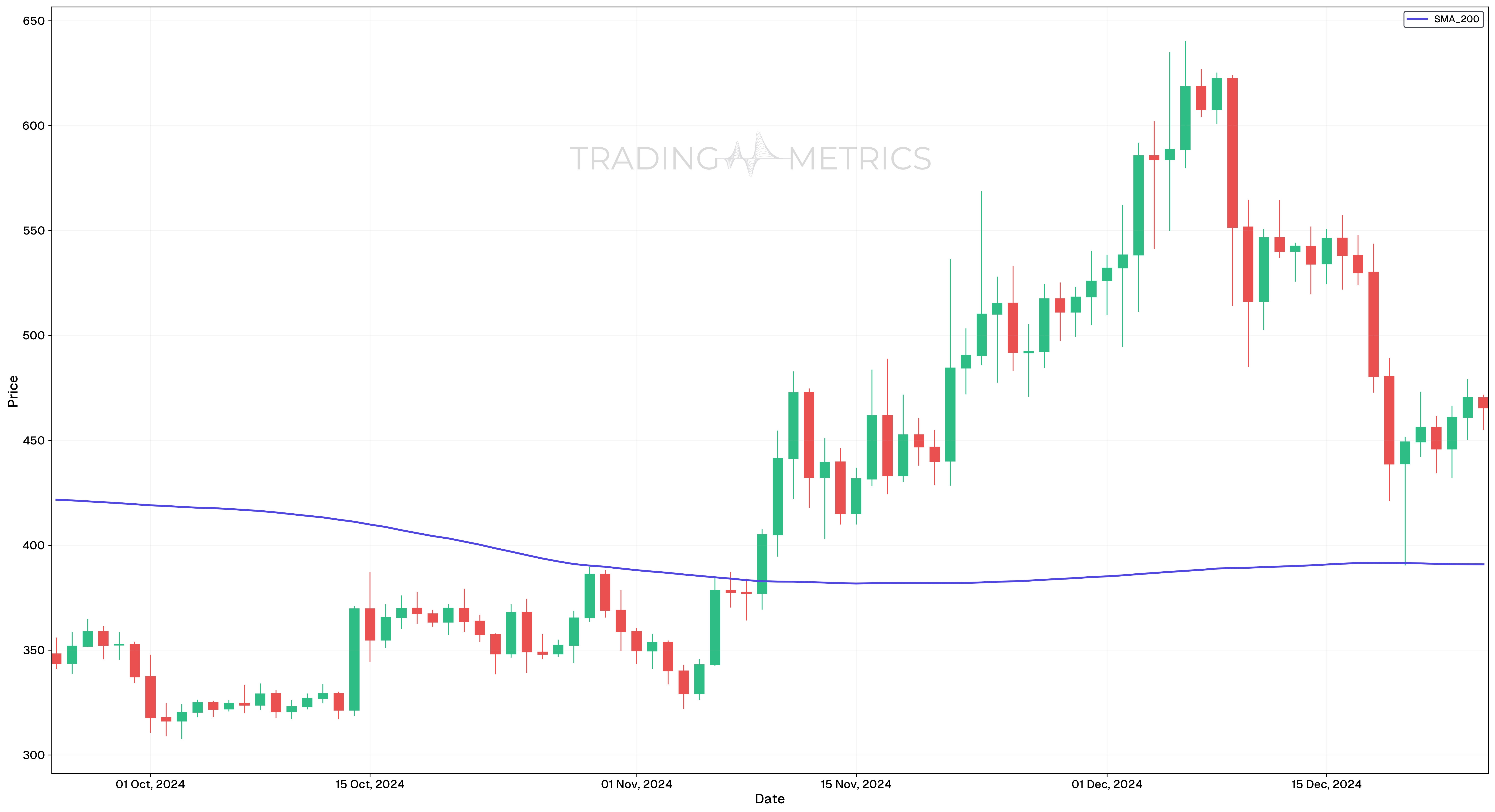
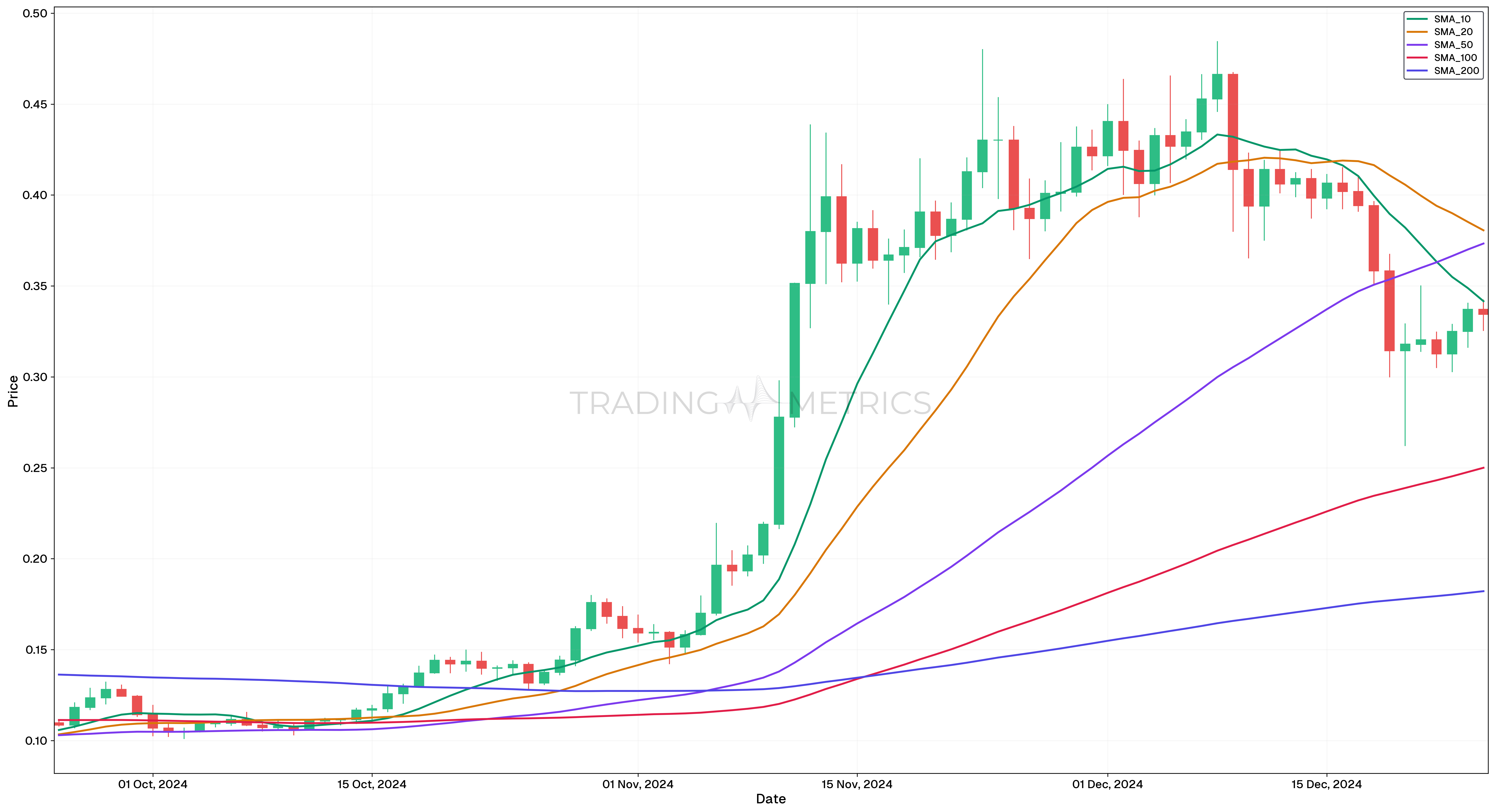
Overall Analysis
Standardized SMA values like the 10-day, 20-day, 50-day, 100-day, and 200-day SMA are essential tools in a trader’s toolkit. Each serves a specific purpose, from identifying short-term trends to confirming long-term market direction. By understanding and utilizing these standardized SMA values, traders can make more informed decisions, enhancing their ability to navigate the complexities of the financial markets. Whether you are a day trader looking for quick signals or a long-term investor seeking trend confirmation, these SMA values offer valuable insights to help you achieve your trading goals.
The Golden Cross & Death Cross
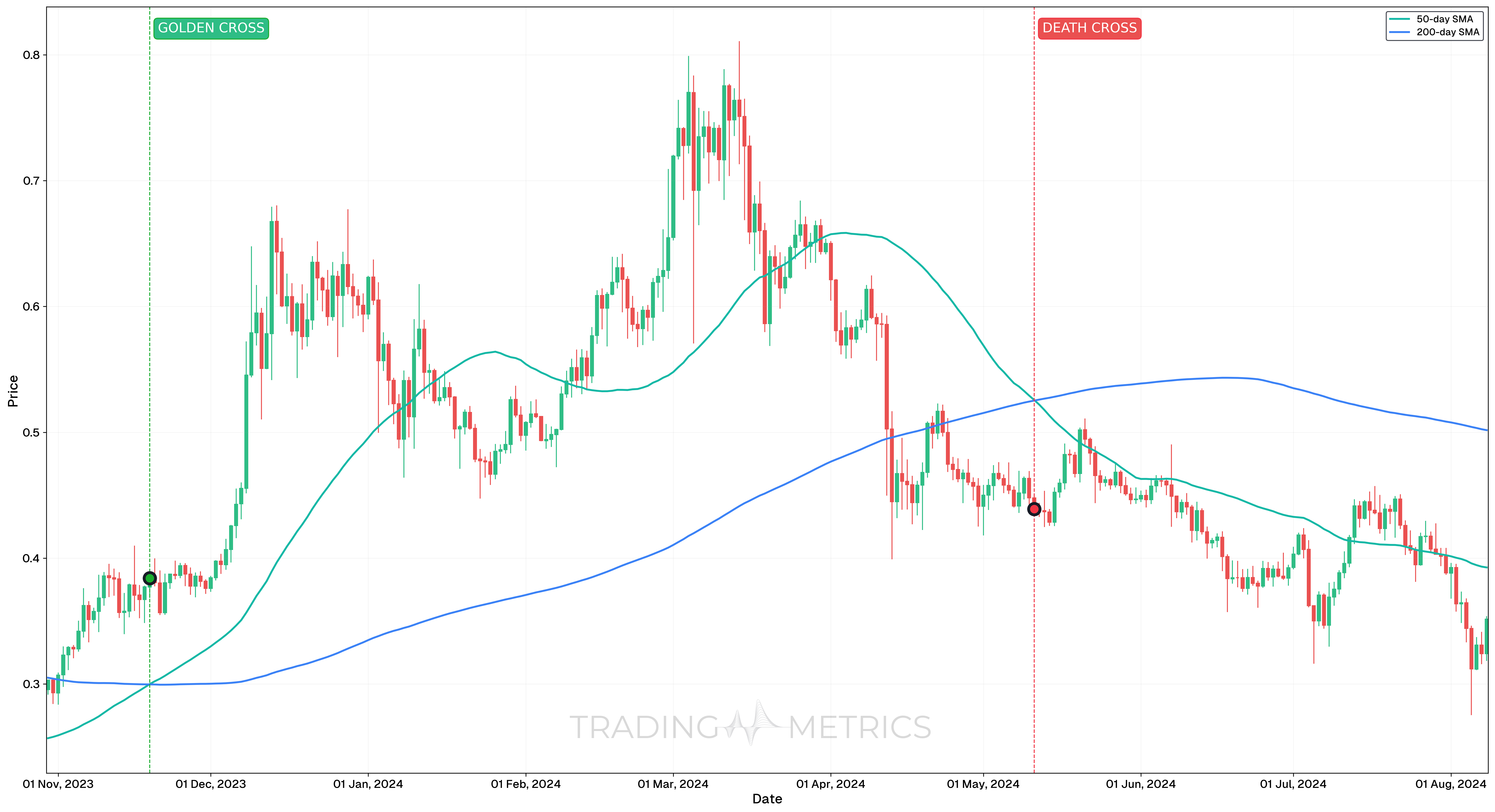
To illustrate the effectiveness of SMA, let’s consider a practical example using a 50-day SMA and a 200-day SMA. These two moving averages are commonly used in the trading community, particularly in the context of identifying long-term trends and potential reversals.
Analysis
- The Golden Cross occurs when the 50-day SMA crosses above the 200-day SMA, signaling a bullish trend.
- Conversely, the Death Cross is observed when the 50-day SMA crosses below the 200-day SMA, indicating a bearish trend.
- These patterns are widely used to evaluate market momentum and sentiment, providing actionable signals for traders.
Trade Setup
-
Golden Cross Example (Bullish Signal):
- On November 19, 2023, the 50-day SMA crossed above the 200-day SMA, forming a Golden Cross.
- Following this crossover, the price experienced significant upward momentum, confirming the bullish trend.
- Traders could have used this signal as a long entry point, particularly when confirmed by additional indicators or price action.
-
Death Cross Example (Bearish Signal):
- On May 11, 2024, the 50-day SMA crossed below the 200-day SMA, forming a Death Cross.
- Following the crossover, the price experienced a downward trend, aligning with the bearish sentiment.
- This could serve as a signal for a short position or to exit existing long trades.
Key Differences
Combining SMA with Other Tools
SMA is often used in conjunction with other indicators to enhance its effectiveness:
- Relative Strength Index (RSI): Combining SMA with RSI can help confirm trends. For instance, if the SMA indicates an uptrend and the RSI is above 50, it adds more weight to the bullish signal.
- Bollinger Bands: SMA is used in Bollinger Bands to define the middle band. The upper and lower bands are standard deviations away from the SMA, helping to gauge volatility.
- MACD (Moving Average Convergence Divergence): This indicator uses SMA to show the relationship between two moving averages, providing insights into the strength and direction of a trend.
Be Aware of Market Conditions: SMA works best in trending markets. In sideways or highly volatile markets, it may provide less reliable signals.
Key Points
- Trend Identification: The Simple Moving Average (SMA) smooths price data over a specific period, helping traders identify the direction of the underlying trend.
- Versatile Time Frames: Short-term SMAs (e.g., 10-day) are used for quick trend changes, while long-term SMAs (e.g., 200-day) indicate broader market direction.
- Support and Resistance: Price levels near SMAs often act as support or resistance, providing key decision points for entries and exits.
- Signal Generation: Crossovers between short-term and long-term SMAs, such as the Golden Cross (bullish) or Death Cross (bearish), are popular trading signals.
- Lagging Nature: As a lagging indicator, the SMA is best suited for confirming trends rather than predicting reversals.
- Combination with Other Indicators: Use SMA with complementary tools like RSI or RSI to confirm signals and reduce false positives.
- Customizable Lengths: Tailor the SMA period to match the specific trading style, such as intraday, swing, or long-term investing.
- Market Condition Sensitivity: SMAs work well in trending markets but are less effective in sideways or choppy conditions, where price frequently crosses the average.
- Backtesting Utility: Incorporate SMA strategies into backtesting to evaluate their effectiveness in historical market conditions.
- Widely Used Benchmark: Long-term SMAs like the 200-day average are commonly used to gauge overall market health and momentum.
Conclusion
The Simple Moving Average (SMA) is a straightforward yet powerful tool in a trader’s arsenal. By helping to identify trends, providing support and resistance levels, and signaling entry and exit points, SMA plays a crucial role in trading strategies. However, to maximize its effectiveness, traders should combine SMA with other indicators, choose appropriate periods, and remain aware of market conditions. Remember, while SMA is a valuable ally, it should be part of a broader, well-rounded trading strategy.
Frequently Asked Questions
Quick answers based on this page's topic.
The SMA calculates the average price over a set number of periods, giving equal weight to every day. Because it includes older data in its current calculation, it reacts more slowly to sudden price changes than the EMA, making it better for smoothing out volatility.
A Golden Cross occurs when a short-term SMA (like the 50-day) crosses above a long-term SMA (like the 200-day). This is a major bullish signal used by long-term investors to confirm the transition from a bear market to a sustainable bull market.
Large-period SMAs, such as the 50, 100, and 200, often act as 'psychological' support or resistance. In an uptrend, price will often bounce off the 50 SMA; in a downtrend, the 200 SMA frequently acts as a ceiling that prevents further price rallies.