Mastering Stop-Loss Orders: Strategies for Capital Protection
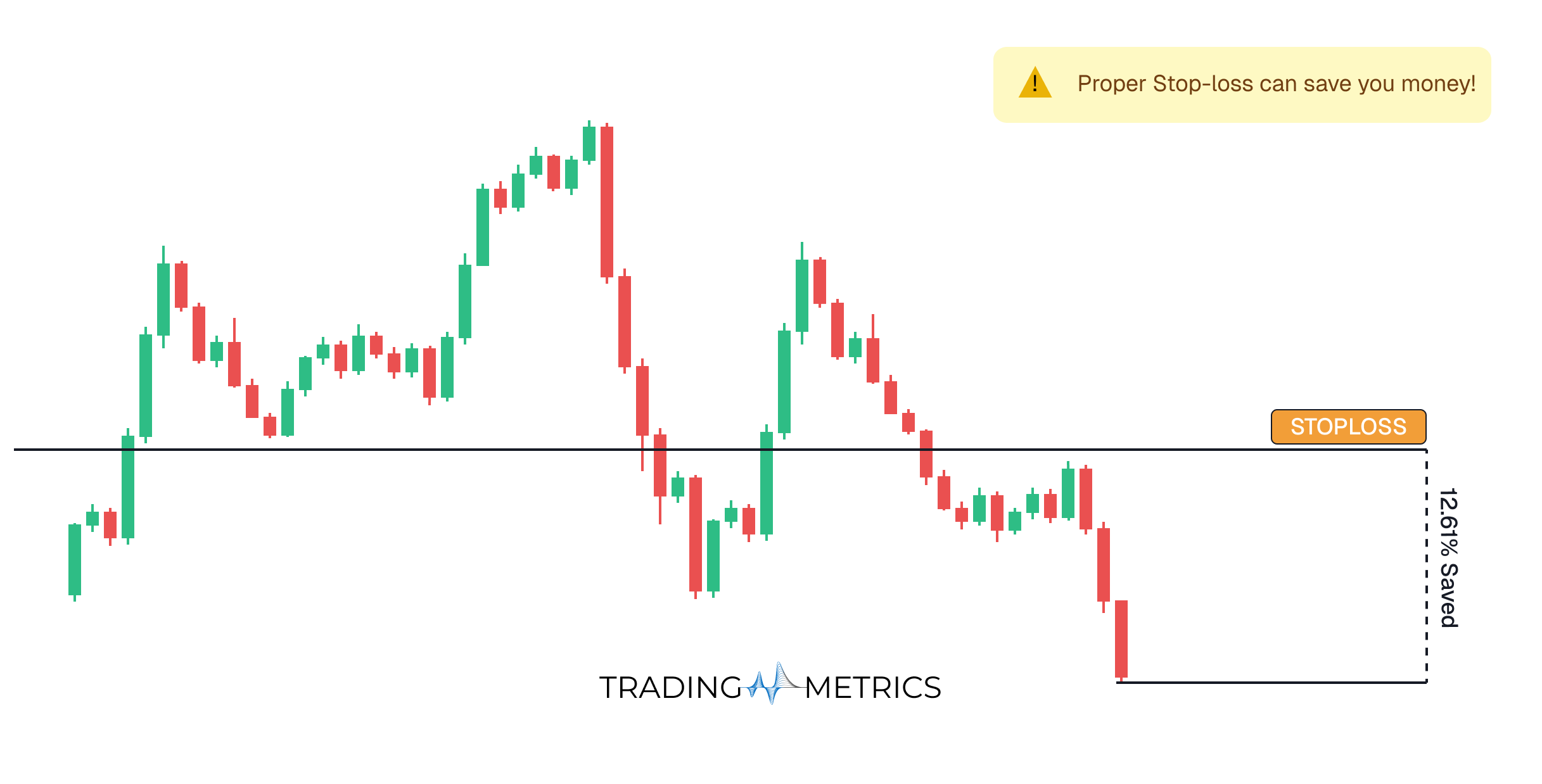
A Stop-Loss is one of the most essential tools in trading for risk control. It automatically exits a position when the price moves against you by a predefined amount, preventing further losses. Whether you’re trading crypto, stocks, or forex, stop-losses act like your seatbelt. You’re not planning to crash, but you’d better have it on.
What is a Stop-Loss?
A Stop-Loss is a predefined price level at which your position is automatically closed to prevent further losses. It’s an important part of risk management and ensures that emotions don’t take control during volatile market moves.
There are different types of stop-losses:
- Support/Resistance Based – Placed just beyond key technical levels on the chart.
- Percentage-Based – Risk a fixed % of your capital (e.g. 1-2% rule).
- Volatility-Based – Use indicators like Average True Range (ATR) to set adaptive stops.
- Time-Based – Exit the trade if it hasn’t moved in your favor after a certain period (common in short-term strategies).
- No Stop vs. Mental Stop – Trading without a stop or relying on mental discipline can be risky and often leads to undisciplined losses.
A stop-loss isn’t about making profits - it’s about staying in the game. Whether you’re using a percentage, technical, or volatility-based level, the key is consistency. A disciplined stop-loss strategy protects your capital and prevents emotional decision-making during volatile moves.
Why Is Stop-Loss Important?
Stop-losses are essential for protecting your capital and maintaining discipline. Here’s why every serious trader uses them:
- Preserve your capital – The top priority in trading is survival, not perfection.
- Stay emotionally detached – Automatic exits prevent panic and hesitation.
- Plan your position size with confidence – Knowing your risk allows precise trade sizing.
- Keep losses small – A series of small losses is far easier to recover from than a single large one.
- Enable psychological freedom – When you know your maximum loss, you can think clearly instead of anxiously monitoring every tick.
No professional trader operates without a stop-loss. It’s more than a tool - it’s a risk discipline that separates strategy from emotion.
The Psychology of Honoring Stops
Setting a stop-loss is easy. Honoring it is where most traders fail. Understanding the psychological mechanics behind stop-loss violations is critical for developing discipline.
Why Traders Move or Remove Stops
Here are the most common psychological reasons traders violate their own stops:
| Psychological Trap | What It Sounds Like | Reality |
|---|---|---|
Need to be right | "The market is wrong, not me. It will come back." | Ego is interfering with risk management. Trade is invalidated. |
Fear of loss | "If I give it more room, I won't have to take the loss." | Moving stop = larger eventual loss. You're avoiding pain now for more pain later. |
Stop too tight (regret) | "This always happens - I get stopped out right before it moves." | Confirmation bias. You remember the few times it reversed, not the many times it didn't. |
Sunk cost fallacy | "I've held this long, might as well wait it out." | Time already spent is irrelevant. Risk is increasing every moment you hold a losing position. |
Hope trading | "Maybe it will bounce from this support level." | Hope is not a strategy. Trade was planned with specific invalidation - honor it. |
The Cost of Moving Stops
When you move your stop-loss after entering a trade, three things happen:
- You violate your risk management - Your planned 1% risk becomes 2%, 3%, or more
- You damage your psychological discipline - You teach yourself that rules are negotiable
- You extend emotional pain - Instead of taking a clean loss and moving on, you prolong anxiety and hope
Moving a stop is not “risk management” - it’s risk avoidance. And risk avoidance always leads to bigger losses.
How to Build Stop-Loss Discipline
Here are proven psychological techniques to honor your stops:
Accept the loss before entering the trade
Use the pre-trade checklist from the Trading Psychology page:
- “If my stop gets hit immediately, will I feel calm and ready for the next trade?”
- If answer is no, your position size is too large or you’re not mentally ready
Use the “click and forget” method
Set your stop-loss the moment you enter. Then close the chart for at least 15 minutes. This removes the temptation to micromanage.
Remind yourself: stops are data, not failure
A stopped-out trade isn’t a “loss” - it’s information. The market told you your idea was invalid. That’s valuable feedback, not personal rejection.
Track stop violations in your journal
In your trading journal, record every time you:
- Moved a stop
- Removed a stop
- Widened risk
Grade these trades as D or F in execution quality. Over time, you’ll see the pattern and the cost.
Implement a “3-strike rule”
If you violate your stop-loss discipline 3 times in one week, take a mandatory break (1-3 days). This creates accountability.
Honoring stops is a skill, not a personality trait. It’s built through repetition, self-awareness, and accountability - not willpower alone.
How to Calculate a Stop-Loss?
There are several methods to calculate your stop-loss, each suited to different trading styles:
Support/Resistance Based
Use recent support or resistance zones to determine a logical stop level. For long trades, place stops slightly below support. For shorts, just above resistance.
Percentage-Based
Use a fixed percentage of your total capital (e.g. 1-2%). If you’re risking 2% of $10,000:
Volatility-Based
Use the Average True Range (ATR) to place stops beyond normal price fluctuations:
Time-Based
If a trade doesn’t move in your favor after a set period (e.g. 3 candles, or X minutes), exit manually. Useful for scalping or fast timeframes.
No Stop vs. Mental Stop
Mental stops may sound flexible but are prone to emotional override. Always use real stops unless you have elite-level discipline and execution.
Limitations of Stop-Loss
While stop-losses are important, they aren’t flawless. Here are some real-world challenges traders should be aware of:
- Slippage – In fast-moving or volatile markets, your stop might fill at a worse price than expected.
- Stop hunting – Some price wicks (often driven by liquidity grabs) can trigger your stop just before the market reverses.
- Stops too tight – Placing a stop too close to your entry often leads to getting shaken out of a valid trade.
- Gaps and illiquidity – In low-volume assets or during news events, price can gap over your stop, skipping the level entirely.
Avoid placing your stop-loss directly on obvious levels like support or resistance. Use a buffer zone to reduce the chance of getting wicked out by noise. A good stop-loss is strategic, not just convenient.
Tools to Combine with Stop-Loss
Stop-losses become even more powerful when combined with other tools that provide context and confirmation:
- Support and Resistance Zones – Place your stop just beyond these levels to avoid getting stopped out by normal price noise.
- Trend Indicators like EMA – Align your stop directionally with the prevailing trend to avoid premature exits.
- Risk-Reward Ratio – Always combine your stop with a logical target to confirm if the trade offers favorable return.
- Volatility – Use tools like Average True Range (ATR) to size and place your stop based on how much the market typically moves.
A stop-loss is just one part of a complete trade plan. When paired with support zones, trend direction, and volatility tools, it becomes a strategic decision rather than a guess. The more context you build around your stop, the more confidence you’ll have in your trade.
Key Points
- A Stop-Loss is a predefined exit that limits losses when price moves against your trade.
- Always define your stop-loss before entering a trade to stay consistent and unemotional.
- Common placement methods include: support/resistance zones, percentage of capital, time-based, and volatility-based using indicators like ATR.
- Stop-losses are not perfect as they can be affected by Slippage, price gaps, and stop hunting.
- Combine stop-losses with tools like support/resistance, EMA, Risk-Reward Ratio, and Volatility for better context.
- Use risk-based position sizing to calculate how much to trade based on your stop-loss distance.
- Avoid adjusting or removing your stop once you’re in a trade as this is often driven by emotion and leads to larger losses.
- Trailing stops can help lock in profits while still protecting against reversals.
Conclusion
A Stop-Loss isn’t just a tool - it’s your trading guardian. It keeps your account alive and your emotions in check. Whether you’re using a percentage of your capital, a technical structure, or a volatility-based method, always use a stop. Combine it with proper position sizing and market structure, and you’ll have a framework that protects you when trades don’t go your way.
The market is unpredictable - but your stop-loss doesn’t have to be. A well-placed stop keeps your risk controlled even when price action surprises you.
Frequently Asked Questions
Quick answers based on this page's topic.
Hard stops remove the 'human element' by automating your exit. Mental stops are frequently ignored during high-stress moments as hope and loss aversion take over, leading to much larger losses than originally planned in your trade setup.
To avoid noise, place stops based on technical invalidation levels or volatility indicators like ATR. Adding a 'buffer zone' beyond obvious support or resistance levels prevents liquidity wicks from triggering your exit right before the price reverses in your favor.
Moving a stop-loss is an act of risk avoidance that teaches your brain that rules are negotiable. This habit prolongs emotional anxiety and inevitably leads to a 'death spiral' where one large loss wipes out weeks of disciplined gains.